

Tackling a Giant
New play explores tainted legacy of author Roald Dahl

The family across from me on an Amtrak ride from New York to Boston two years ago was clearly Jewish: the father wore a yarmulke to cover his head.
Their daughter, who appeared to be about nine years old, was deeply absorbed in Roald’s Dahl’s Charlie and the Chocolate Factory. Or maybe it was Matilda.
“Should I tell them?” I texted to a friend. Dahl had made several ugly anti-Semitic comments in the last years of his life, such as: “Hitler didn’t just pick on them for no reason.”
Some of these statements were in a piece Dahl wrote after Israeli attacks on Lebanon in the 1980s, so these weren’t off-the-cuff. And he was unapologetic afterwards.
I didn’t say anything to that family on the train, but I did, in a brief phone call, speak of Dahl’s antisemitism just barely loud enough for them to hear, if they cared to.
I don’t think my comments registered, which may have been for the best. In most cases, I think we can appreciate the art while recognizing the imperfections, limitations and, in this case, the loathsome qualities of the artist.
And why deny a kid the pleasure of losing herself in the wacky and entrancing world of a Roald Dahl book?
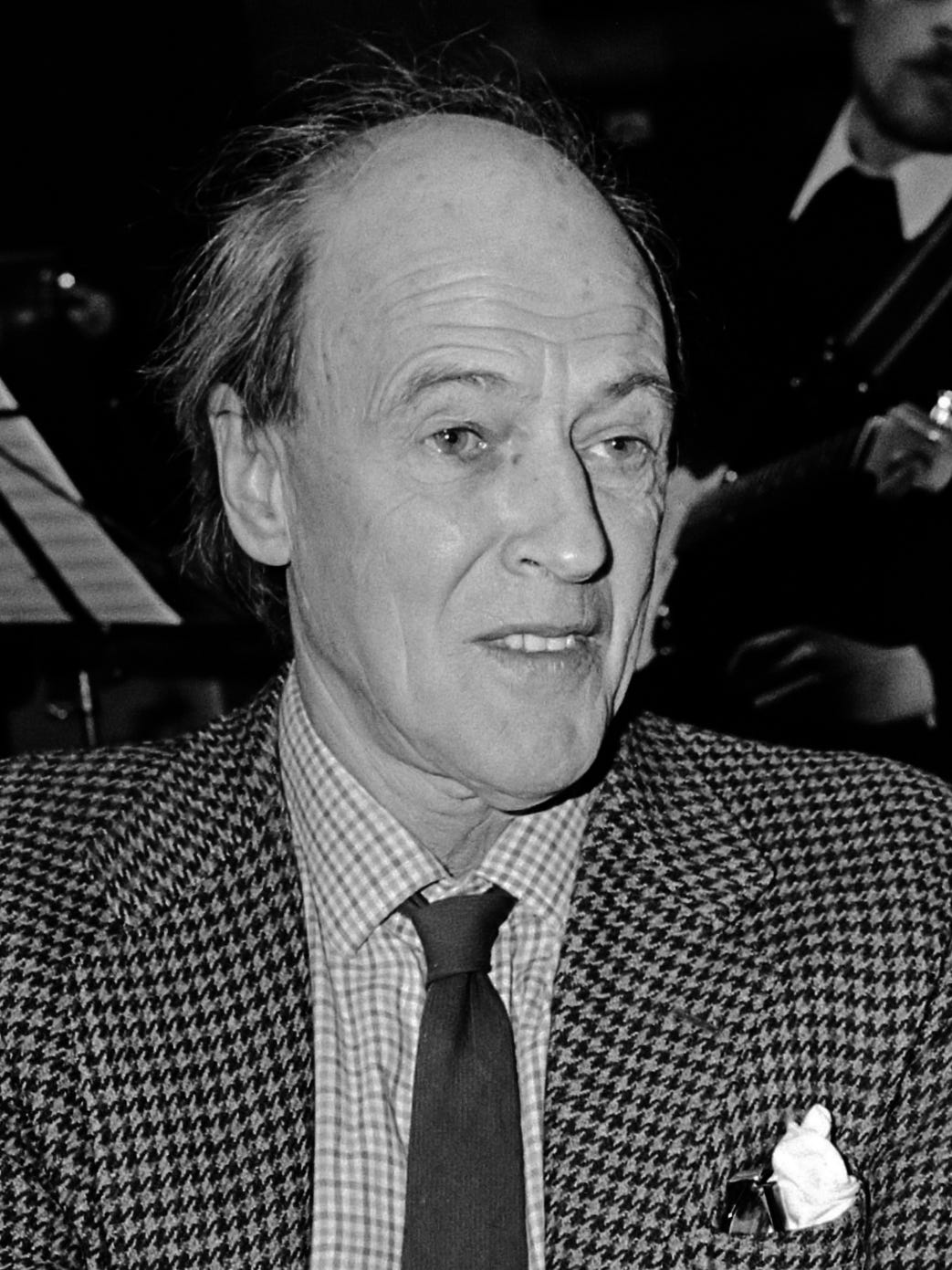
Giant opens in New York
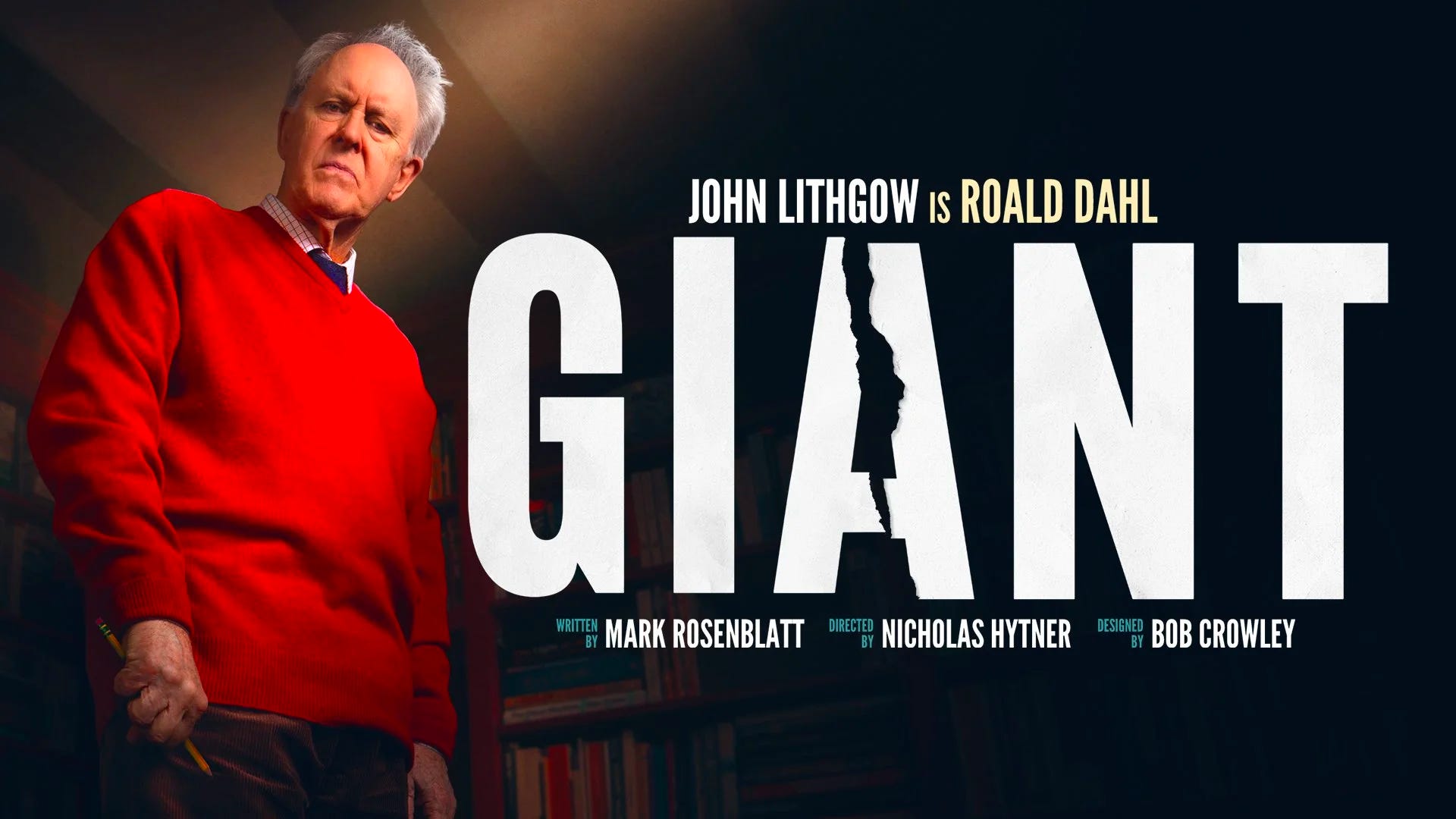
The play Giant starring John Lithgow as Dahl, opened at New York’s Music Box Theater on Monday after an Olivier-award-winning run in London.
It’s perfect casting, and not just because the tall, gangly Lithgow is 6-foot-3 and the angular Dahl was a gawky 6-foot-6. I’m sure Lithgow brings a searing intensity to the role.
I haven’t seen the play yet. Reviews say it shows the complications of the man, how losing his father and sister when he was just three years old shaped his worldview.
Of course that’s no excuse for his prejudice.
In a book review about the Lebanon War that appeared in the August 1983 edition of the British periodical Literary Review, Dahl wrote in reference to Jewish people, “Never before in the history of man has a race of people switched so rapidly from being much-pitied victims to barbarous murderers.”
Dahl, who died at age 74 in 1990, made reference to “those powerful American Jewish bankers” and asserted that the United States government was “utterly dominated by the great Jewish financial institutions over there.”
After claiming that Israel’s 1982 invasion of Lebanon was “hushed up in the newspapers because they are primarily Jewish-owned,” he went on to say, “I’m certainly anti-Israeli and I’ve become anti-Semitic. …
“There aren’t any non-Jewish publishers anywhere, they control the media—jolly clever thing to do—that’s why the president of the United States has to sell all this stuff (weaponry) to Israel.”
Playwright ‘adored’ Dahl
Like so many of us, Giant playwright Mark Rosenblatt grew up with Dahl’s books.
“I adored him. He was the wallpaper of my childhood,” he said in a New Yorker profile this month.
His grandmother, as a child, spent the war on the run through Europe to escape deportation to death camps.
Bigotry has a stench, and when someone is unapologetic, it’s hard to forgive him. Yet seeking to comprehend Dahl remains a worthy endeavor.
Rosenblatt has an incisive view of bigotry: “That’s what prejudice does. It offers a mirage of clarity,” he told The New Yorker, “but, in fact, makes your world darker and smaller.”
His goal in Giant is not solely to “smash the Roald Dahl piñata,” he said, but to understand where his “casually contemptuous antisemitism” came from.
“By seeing Dahl as a nuanced, complex, contradictory person,” Rosenblatt wrote in his treatment for the play, “I’m refusing to reduce him to the level of bogeyman.”
The question we all ask: How could someone with such a nasty and limited worldview write such gloriously imaginative and captivating books?
This is Rosenblatt’s first play. Perhaps it can help answer that question, or even better, spark further conversation.
I really enjoy reading your pieces, Michael!
I agree with you that this is difficult to reconcile with my admiration for Dahl's books... It seems to weirdly parallel the current anguish around Cesar Chavez.