

¡Conejo Malo!
Why Bad Bunny's Super Bowl show meant so much to so many

Like many of you, I didn’t know much about Bad Bunny or his music before the Super Bowl, other than that he’s from Puerto Rico, is hugely popular, and just became the first person to win a Grammy for a Spanish-language album.
But what we saw Sunday was first and foremost a celebration of humanity, in all its glorious colors — an exaltation of community as global as it was local.
“My name is Benito Antonio Martínez Ocasio, and if I'm here today at Super Bowl 60, it's because I never, ever stopped believing in myself,” the singer, who a decade ago was working in a supermarket, said in Spanish.
“You should also believe in yourself,” he said. “You're worth more than you think. Trust me.”
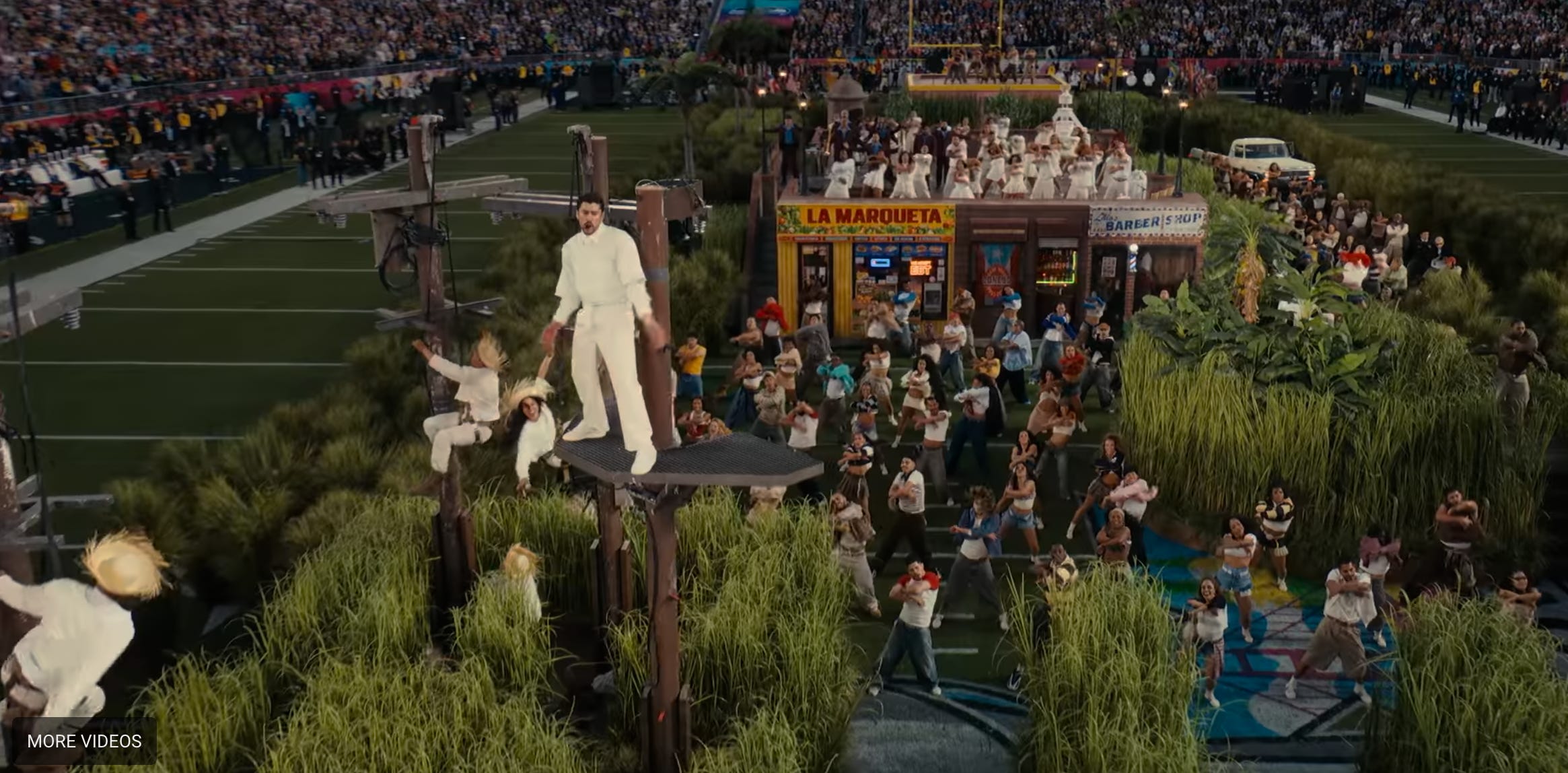
Bad Bunny’s show was outdoors and lush, from the people dressed as luxuriant trees to the pop-up sugar-cane fields.
The dancers were sensual, uninhibited, and at times salacious. No wonder repressed Republicans couldn’t handle it.
The wedding was as real as the joy of everyone on that field, from Lady Gaga to Ricky Martin to the young man opening the proceedings who said, “¡Que rico es el Latino - hoy se ve!”
Literal translation: “How rich is the Latino - today you’ll see!”
He wasn’t talking about financial wealth but speaking to the richness of Latin American culture, keenly aware that there are different types of wealth in the world — and that money, while necessary, isn’t the most important.
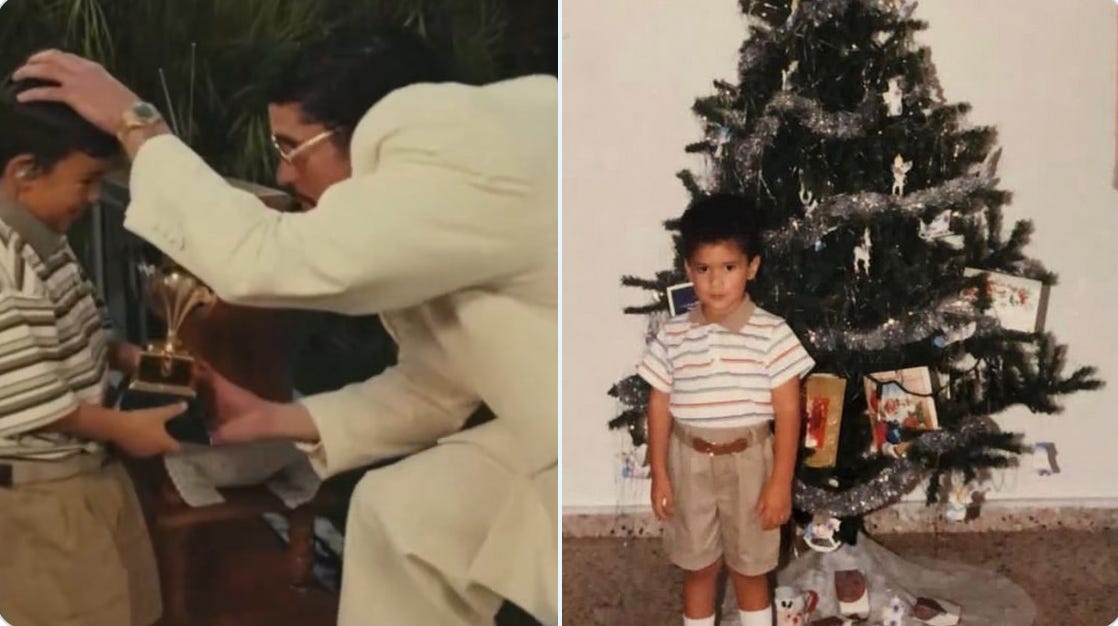
Did you notice all the generosity in the 13-minute show? Bad Bunny gets shave ice and gives it to the sweltering taco vendor. Later El Conejo offers his Grammy to a little boy — this was rehearsed but still a sweet moment.
Immediate online speculation suggested the boy was Liam Ramos, a 5-year-old Ecuadorean recently detained by ICE in Minnesota, or meant to represent him.
But it was Bad Bunny giving the statue to a likeness of his childhood self — the image on the right below is young Benito in the late 1990s.
And there was a trust fall, when Benito falls backward and is caught by his compadres, literally his supporters.
What a stark contrast to the desultory Turning Point USA show, held indoors and taped in advance. About 6 million people watched that tedious show live, compared to 135 million watching Bad Bunny’s performance.
By Thursday afternoon, Bad Bunny’s show had been streamed more than 81 million times on YouTube. Combined with live viewership, it was the most watched halftime show ever.
A conscious choice
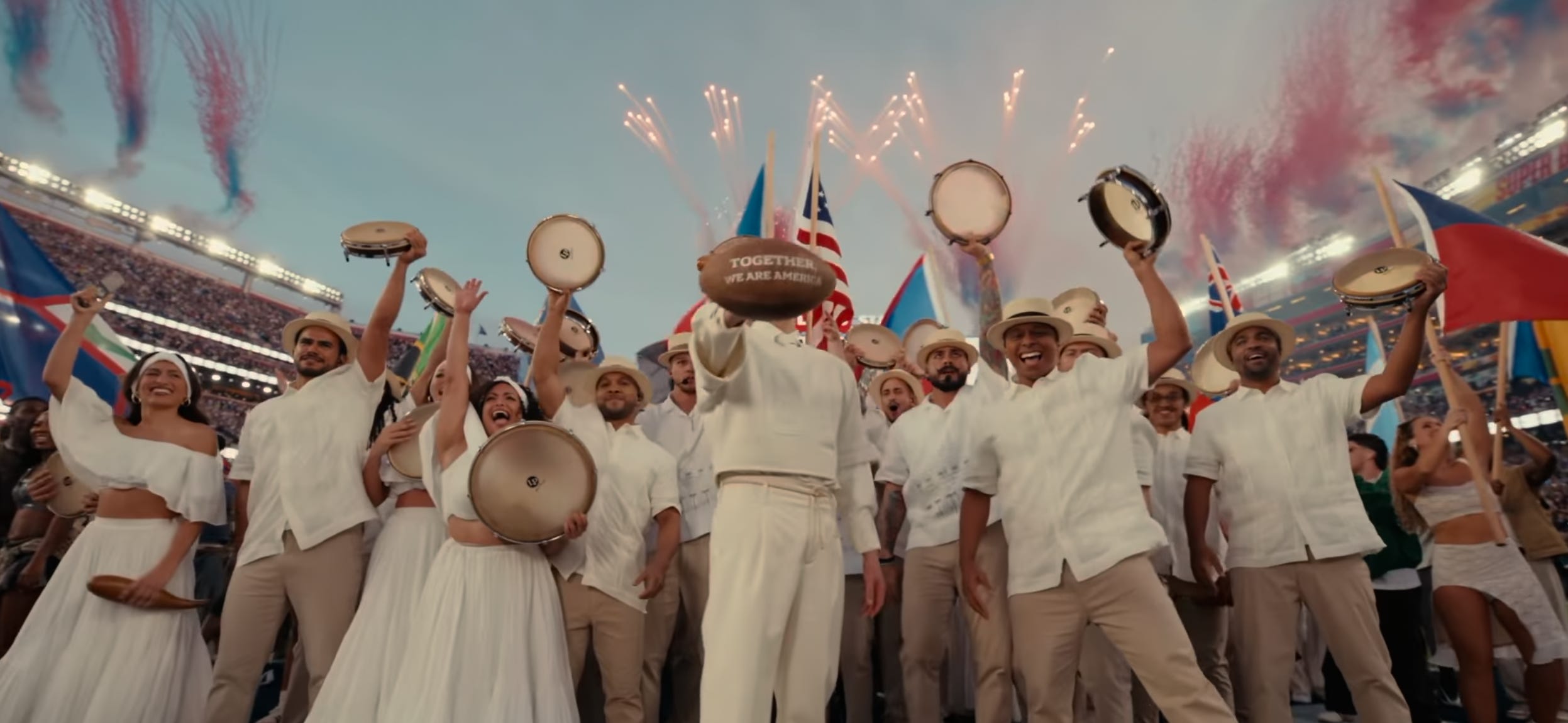
Some criticized Bad Bunny, 31, for singing only his Spanish, though he did say “God Bless America” in English near the end of his show, then recited the names of countries throughout the Americas, moving from Chile and Argentina in the South to Canada in the North.
And the message on the football he held read: TOGETHER WE ARE AMERICA. Then he spiked the ball, staking his claim.
A friend posted on Facebook: “I disliked it overall for being bypassed as an English-speaking person watching an American event. Captioning and a few English numbers would have helped.”
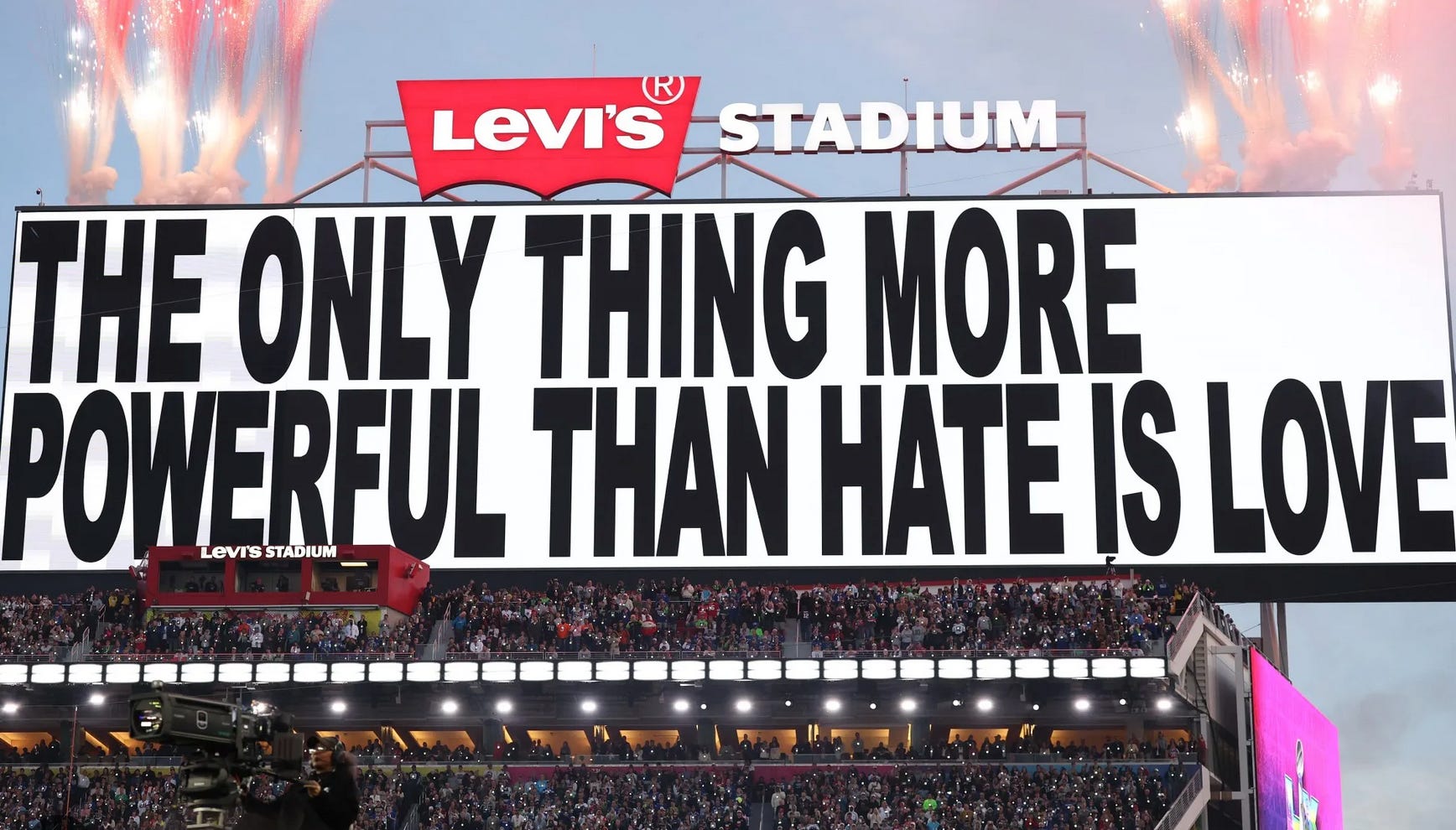
One of his friends responded: “You didn’t need captions to understand Bad Bunny’s performance. The story was clear in the images, the emotions, and the culture on that field. The message was simple: we are here, we belong, and love is stronger than hate.”
I think my friend’s intent was good; he wanted to hear what Bunny had to say. But Bunny had a different message: Spanish-speaking Latinos don’t always have to accommodate others.
Even the business magazine Forbes understood this: “Bad Bunny never sang in English, never changed his accent, never tried to sound like anyone other than a kid from Puerto Rico,” Hannah Abraham wrote.
“And that authenticity took him to the Super Bowl.”
Before the show Bad Bunny responded to critics: “English is not my first language,” he said. “But it’s OK, it's not America's first language either.”
Messages from above
Notably, the scoreboards were primarily used for messaging throughout the performance, rather than to show close-ups of Bad Bunny and the dancers.
The Hollywood Reporter ran a story with the hyperbolic headline: “How Bad Bunny Became the Liberal Celebrity That Finally Broke Trump.” Though Trump and his millions of supporters haven’t been broken, the ice is starting to crack.
Steven Zeitchik, the author of that story wrote: “The rapper … broke Trump and MAGA by sidestepping so many of the temptations of those who’ve tried before. He eschewed the cutting comedy and the tit-for-tat bullying …
”Instead the 31-year-old deployed something far more effective: unflappability. Even when he was offering subtle digs, and there have been many, Bad Bunny on the surface has not seemed to be reacting to anything at all. He has vibed indifferent and cool. Also, he had joy.”
Subversive Easter eggs
Bad Bunny wore the number “64” on his shirt. The white numerals on the white jersey didn’t leap out but carried a subtle message.
He later said “64” was a tribute to his uncle, a 49ers fan who was born in 1964 and recently died, but Puerto Ricans quickly grasped the deeper meaning.
In 2017 when Hurricane Maria devastated the Puerto Rican islands, officials initially estimated that only 64 people had died. Residents knew that figure vastly underestimated the fatalities.
While the precise number will never be known, a George Washington University study concluded there were 2,975 “excess deaths” after the hurricane, due to lack of food, water, electricity and medical care. That number is nearly identical to the 2,977 fatalities on 9/11, which shattered our nation.
Though Puerto Rico is part of the United States, the U.S. was woefully slow to help provide relief and repair its infrastructure.
Many believe President Trump, who tossed out rolls of paper towels when he finally visited, was intentionally indifferent because most Puerto Ricans are non-white and speak Spanish.
Parts of Puerto Rico’s interior were without electricity for months — signified during the Super Bowl show by telephone poles emitting showers of sparks.
NFL stood strong
Let’s not overlook the National Football League’s courage is selecting Bad Bunny and allowing him to create the show. The NFL, certainly not known for taking revolutionary stands, stood by Bunny in the face of White House condemnation.
How ironic that the league that undermined Colin Kaepernick for taking a knee a decade ago to protest police brutality provided the platform for what may be the most memorable moment of the United States’ 250th birthday celebration.
Sometimes I wonder if Republicans’ antipathy toward Democrats stems from envy because we liberals are, well, more liberated — we have more fun.
As activist Emma Goldman purportedly said a century ago: “If I can’t dance, it’s not my revolution.”
The waiter at Quiote brought us two menus and offered us waters, “ice or no ice?” We both said “no ice, please” He cracked a huge grin saying “NOBODY likes ice!” and winked at us as he walked back toward the kitchen. The entire corner where we were sitting erupted in laughter…
You’re such a great writer, Michael. And Bad Bunny is a Badass! I loved every second of his show. Indeed it was a celebration of humanity.